
Cut heat, glare, and UV - legally.
Window tint is a thin film applied to your glass that reduces heat and glare and blocks UV; the darkness is measured as VLT (visible light transmittance) - a lower VLT number means a darker tint.
What it protects against
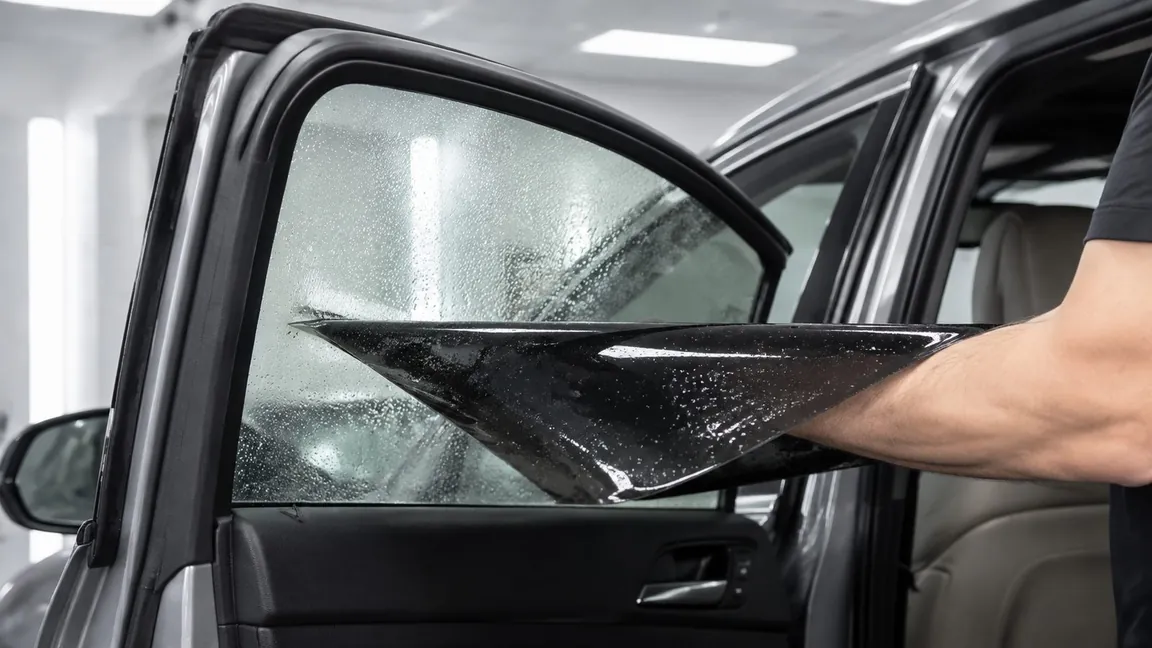
Window tint, in plain terms
The everyday threats window tint is built to handle.
Cabin heat
Ceramic tint rejects a large share of solar heat.
Glare
Easier, safer driving in sun and at night.
UV rays
Blocks up to 99% of UV - protects skin and interior.
Interior fading
Keeps upholstery and dash from washing out.
Prying eyes
Darker rear glass adds privacy.
Shattering
Film helps hold glass together in an impact.
Choosing a tier
The three tiers of window tint
A dark window isn't the same as a cool one. Every tier gives you the shade, glare control, and 99%+ UV protection - the tiers differ in how much of the heat you actually feel they reject. Pick your darkness for the look, and the film tier for how cool it keeps you.
Standard (dyed)
Blocks the least heat
The entry film: the shade, glare control, and 99%+ UV any tint gives you, and a color-stable version carries a real warranty against fading. It rejects the least heat of the three, and lower-quality dyed films can fade or shift color over time - in Florida's heat, many owners step up to carbon or ceramic.
Carbon
A durable step up in heat rejection
A tougher film that rejects noticeably more heat than a standard dyed film, with the same shade options and 99%+ UV, and it never fades. It won't cut the heat like ceramic, but it holds up well and looks sharp.
Ceramic
Rejects the most heat
Same shade and look as the others, but it actually rejects the heat you feel - up to about 90-95% of infrared and 60-70% of total solar heat - so the cabin stays cooler and your A/C works less. Plus 99%+ UV.
Which tint keeps you cooler
Ceramic vs. carbon vs. standard
The three tint types most drivers choose between. Every quality tint blocks about 99% of UV at any shade - what really separates them is how much heat they reject. Darker is not cooler; the film type is.
| Tint type | Heat rejected | Blocks UV | Fades? | Best for |
|---|---|---|---|---|
| Standard (dyed)The entry film. Gives the shade and 99%+ UV any tint does, but rejects the least heat - and lower-quality dyed films can fade or shift color over time. | Lowest | 99%+ | Can fade over time | Shade and a darker look on a budget |
| CarbonRejects noticeably more heat than a dyed film and never fades. It won't cut heat like ceramic, but it holds up well and looks sharp. | Moderate | 99%+ | No | A durable step up without ceramic pricing |
| CeramicRejects the most infrared and total solar heat (often around 60%+ TSER, and 90%+ infrared at the premium end), so the cabin stays cooler and the A/C works less. | Highest | 99%+ | No | Keeping the cabin coolest - Florida heat |
"Heat rejected" is the film type's typical standing, not a single product number - the exact figure depends on the specific film. Type comparison referenced from Ceramic vs. dyed vs. carbon window tint - comparison guide. Current as of August 2026.
PPP verdict
Darker isn't cooler - the film type is. Shade (VLT) is about looks and privacy; how much heat you actually feel comes from the type of film, so a light ceramic can beat a dark dyed film. And watch the numbers: shops advertise "IR rejection," the big flattering figure - ask for TSER (total solar energy rejected), the honest whole-picture number. See your tint options →
See your options
Get matched with a vetted window tint shop
Window tint pricing depends on the film tier and how many windows your vehicle has, so the real number comes from a shop. Tell us what you drive - we'll show your options and connect you with a vetted installer for a quote.
Quick answers
Common window tint questions
Does a darker tint block more heat?
What do the heat-rejection numbers actually mean?
What does a tint warranty actually cover?
How dark can I legally tint my windows in Florida?
Go deeper
Guides worth reading before you buy
Ready?
See if window tint is right for your vehicle.
Tell us what you drive and how you use it - we'll give you a straight, right-sized recommendation.